Mahjong Connect: About the Game and Where It Really Came From
Anna | November 29, 2025
Mahjong Connect feels like it has always been part of the web. If you lived through the Flash boom and were old enough to haunt sites like Miniclip or Kongregate, you probably clicked through a few rounds. I certainly did. A neat grid of Mahjong tiles, the crisp click when a pair disappears and the creeping rush as the timer runs low.
It often gets mistaken for a stripped-down Mahjong Solitaire, but it is not that and it is definitely not traditional four-player Mahjong. So where did it come from?
Here’s what we know: unlike other solo games like Klondike or Pyramid Solitaire, Mahjong Connect has no 200-year paper trail. It’s one of the first globally popular tile-matching games born entirely digital. Its history starts on a screen with no boxed version, no tabletop origin and no physical rulebook.
A digital-first design
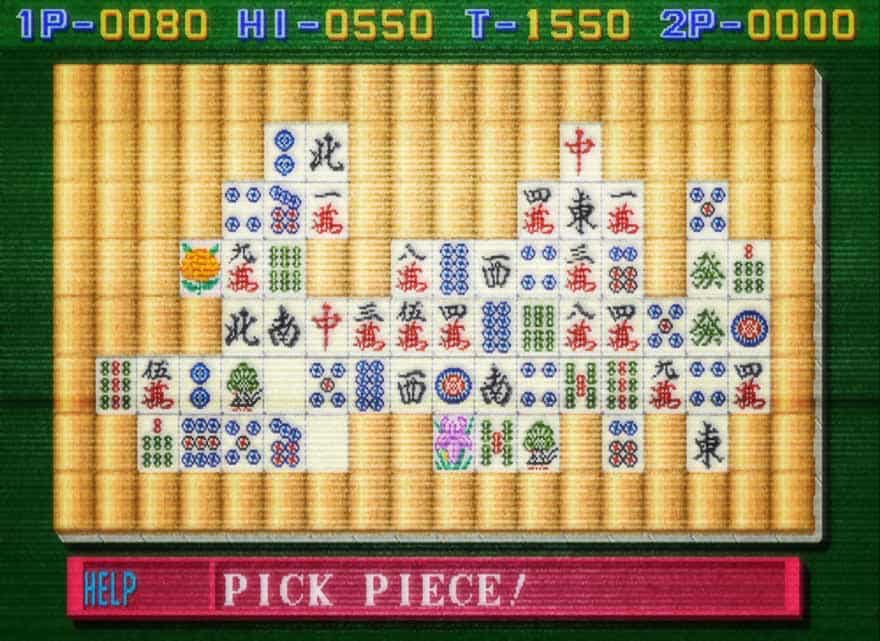
The first real version of the format showed up in Japanese arcades in 1989. A coin-op game called Shisenshō: Joshiryō-hen, developed by Tamtex (a Japanese software studio) and released by Irem (best known for arcade hits like R-Type), featured a flat tile grid and the now-familiar rule: link matching tiles with a path that bends no more than two times. It was fast, timed and fully solo. Players had to plan ahead and move quickly before the clock ran out. It didn’t look or play like other Mahjong games at the time, but the tiles made it instantly familiar.
From arcades to home computers
That arcade version was popular enough to leave coin-ops almost right away. In 1990, Irem released a version of Shisen-Shō (四川省) for the NEC PC-9800 series, which was the most widely used home computer in Japan at the time.
On PC, the game got sharper graphics and a calmer pace. You could play with a keyboard or mouse, which made it perfect for both home users and office workers. More PC versions followed in the early 1990s, usually under the name Shisen-Shō or Nikakudori.
Shisen goes global
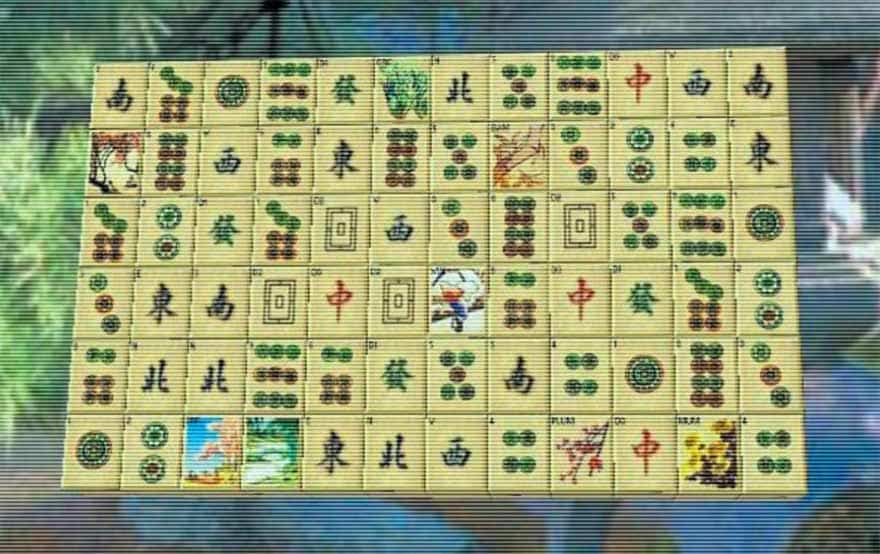
Shisen-Shō slipped out of Japan in the early 1990s on MS-DOS, Amiga and Atari ST. Those early ports proved the idea worked outside arcades, but they stayed niche and never made much noise. The real lift came a few years later. In 1997, KShisen on Linux and Kyodai Mahjongg on Windows both included polished Shisen modes that quietly introduced the game to everyday desktop users. Long before the Flash era, those versions gave the puzzle a steady audience. By 2000, MahJongg Master 3 from eGames started using the label “MahJongg Rivers” on retail CDs, which helped standardize the name in Western packs and catalogs. It wasn’t mainstream yet, but the groundwork was set.
The name that stuck
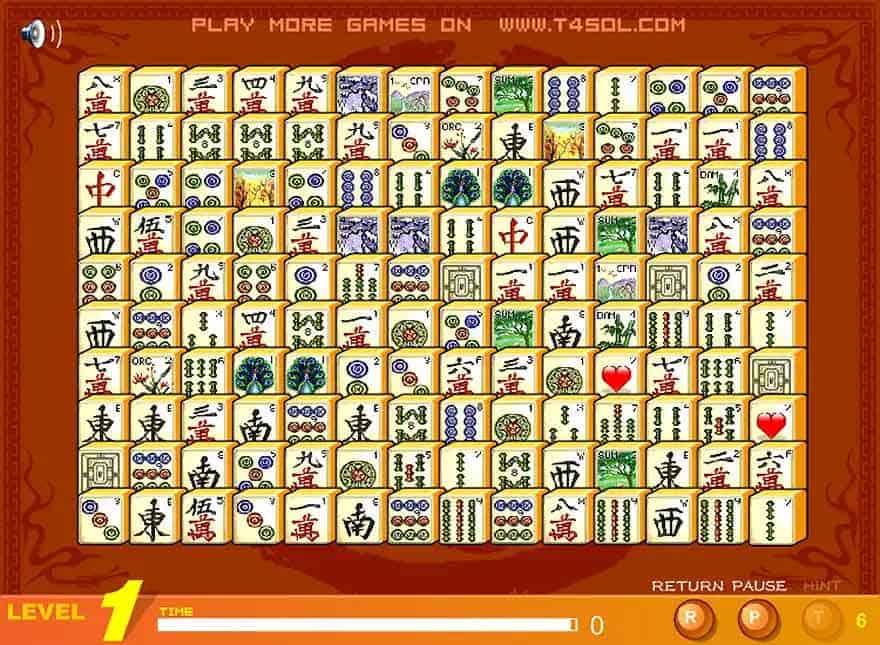
The label Mahjong Connect didn’t come from the arcades or the early PC versions. It showed up later, during the Flash boom of the 2000s, when casual games ruled the browser and sites like Miniclip, Shockwave and Newgrounds were packed with lunchtime clicks. I remember losing hours to Bejeweled and drawing ridiculous ski jumps in Line Rider. If you were there, you know the vibe. One more round, then suddenly it’s midnight.
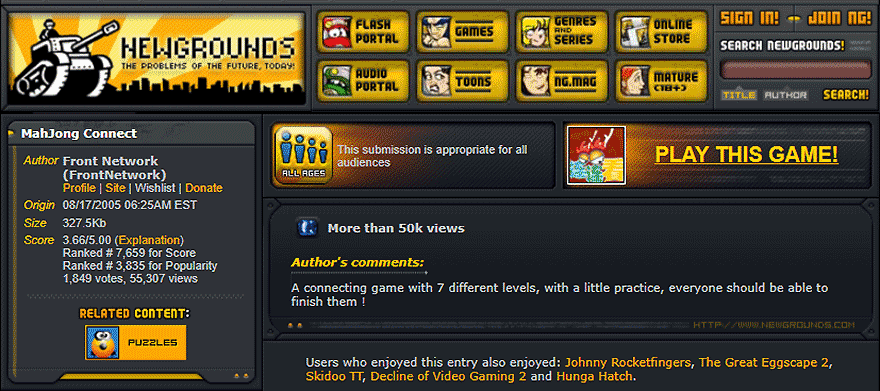
On 17 August 2005, the name Mahjong Connect appeared for the first time. A Flash version credited to Front Network, a small indie studio, was uploaded to Newgrounds, where it even made the front page. Around the same time, it popped up on the popular French site T45OL. Through the late 2000s, it spread across other portals under names like MahJongCon, Mahjong Link and Mahjong Chain.
The Flash era also produced a zoo of reskins. Butterfly Kyodai turned the tiles into butterfly wings. Dream Pet Link used cartoon animals. Others swapped in cupcakes, sushi, jewels or emojis. The names and visuals changed, but the core stayed the same. Two-turn paths, quick levels and a pressure timer built for 5-minute sessions.
Adapting for the touchscreen age
When Flash faded in the 2010s, the Mahjong Connect format didn’t vanish. Developers rebuilt it in HTML5, updated the interface and ported it to mobile. Now you can play it on nearly any device: phone, tablet or desktop, with smooth touch controls and improved visuals. The game might load faster and look cleaner but the bones are still the same. The rules didn’t need fixing.
One rule, many little twists
The base rule of Mahjong Connect has stayed the same for decades, though small differences exist. Some versions allow three turns instead of two, others let you reshuffle or use hints. But the version most people played was the original Flash Mahjong Connect. It kept things simple and that’s the one they kept coming back to.
So that’s the version we brought back. A modern remake with the exact same rules, because that version got it right. You can play it full screen on FreeSolitaire.com, in your browser or on your phone, no download needed. The tiles look fresher than in 2005 but the loop is the same. Connect. Clear. Keep going. Same tiles. New rhythm.